Green Triangle or Toffee Finger – what’s your favourite?
As I stare at the Quality Street perched on one of the remaining desks, I wonder when the team will share the next box of chocolates.
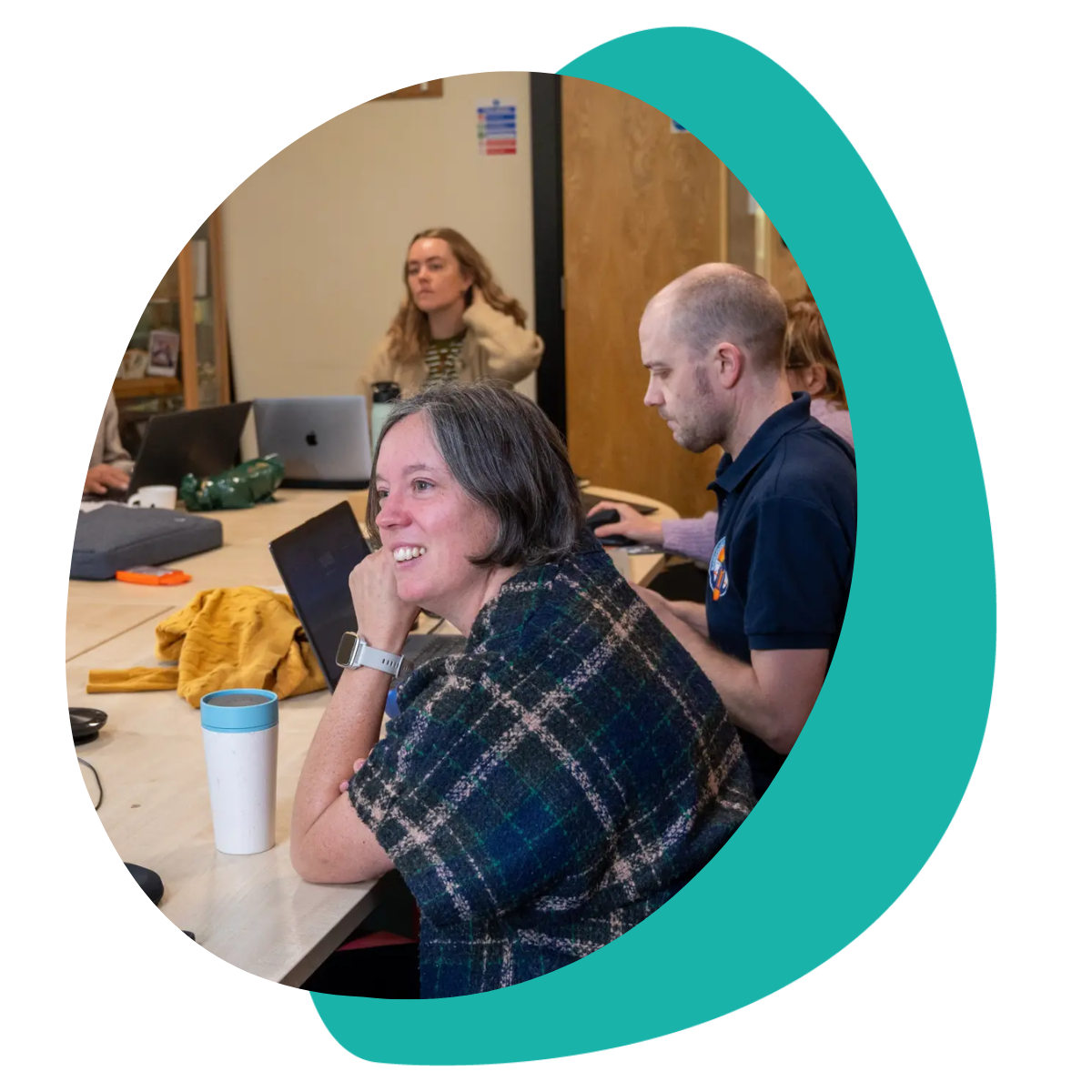
Action Hampshire is vacating its offices. As of February 2024, all staff will remote-work for an indefinite about of time. As a new starter within the organisation, I didn’t expect to feel quite so apprehensive.
Who needs a quaint, quirky, and freezing cold office?
Westgate Chambers in Winchester was built in the 18th century. Sections of the premises have been modernised and re-configured to accommodate a lift and functional working space. A creaky, steep staircase winds centrally through it, leading up to our office on the second floor. Original sash windows mean the office is draughty and the heating system isn’t powerful enough for sedentary working, so we tog ourselves up with coats or hats and switch on heaters. I’m told in Summer it’s stiflingly hot with no airflow.
Charities are facing a ‘cost of giving crisis’ so shouldn’t we be cutting costs wherever we can? A central Winchester address commands high business rates and rent. Furthermore, an energy in-efficient building means it’s expensive to heat and service.
As a progressive organisation we’re geared up to work remotely, with snappy apps designed to store information so we can share and work in a productive way wherever we’re sitting. We have systems for just about every operational need, project management, team strength analysis, file sharing and praise recording. We even have the capability to organise a Secret Santa completely remotely! We are encouraged to have social, virtual catch ups and our team meetings always have a wholesome element of non-work-related chit chat.
Action Hampshire advocates taking breaks to exercise during working hours. It’s not always achievable on meeting heavy days but from personal experience, the charity doesn’t just pay lip service to this well-being strategy.
In addition to gaining valuable commute time back, working from home has significant practical benefits. We can unload the dishwasher, sweep the floor, or wipe the worksurface in the time it takes to make a round of hot drinks. For carers of pets and people, being home-based oils the cogs of daily life, allowing us to walk our dogs, make the school or nursery run, visit elderly relatives, or let the plumber in.
We don’t need a Winchester postcode to impress the organisations we work with, so is an office necessary?
For those who live in shared accommodation, working from a bedroom or sofa, the picture isn’t quite as rosy. It can be challenging to switch off from work if the computer is next to your bed and without a desk you are more likely to develop musculoskeletal problems.
Long-term working from home has even more serious implications. In 2022, Microsoft published the ‘New Future of Work’ Report. In the study, 81% of under 35s feared loneliness from long-term home working. For many remote working can be extremely lonely. In fact, the same study revealed almost 2/3 of home-workers feel isolated or lonely at least sometimes and 17% do all the time.
The Royal Society for Public Health’s survey conducted in 2021 said that 67% of employees who switched to home working during the pandemic felt less connected to their colleagues. Without face-to-face contact, it can be harder to share thoughts and feelings which can lead to anxiety and depression.
Action Hampshire champions well-being and is committed to tackling the issue of loneliness. The pandemic has influenced the way we work and function in our day to day lives. Its impact is having devastating effects on social connectedness and through various projects we are helping combat this growing issue.
Home working but at what price?
According to the Microsoft survey, rent and facility costs are often smaller than the payroll. As a rule of thumb, these costs are usually 10% of total wage costs. Therefore, an organisation must only be 10% more productive to make an office pay for itself. Loneliness, on the other hand is costing the UK £2.5 billion (Peyrtrinet et al 2020).
Could our organisation be even more productive? Could we find cheaper office space? The consensus amongst the team is that from an idea sharing and well-being perspective, we’d prefer a permanent location where we can co-work as often as we wish. However, like many charities we’re faced with funding cuts, increased overheads underlined by a cost-of-living crisis.
In an ideal world, we’d like to share a box of chocolates in communal workspace but not to the detriment of the organisations we support.
Follow this link for more information about how Action Hampshire is tackling loneliness
Follow this link for FREE mental health resources on remote working
Follow this link to read Microsoft’s full ‘Future of Work’ report