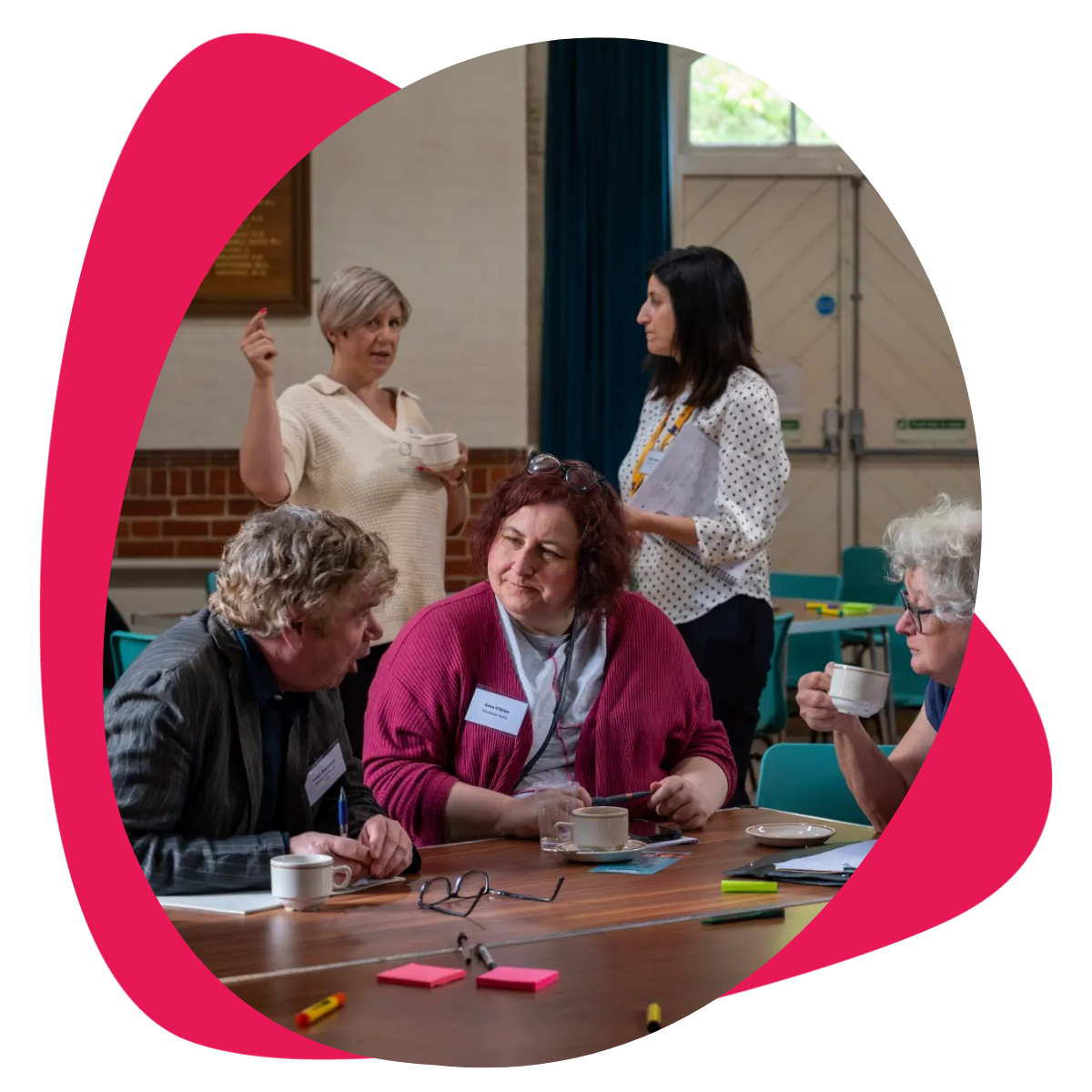
10 tips to keep meetings on track.
Ever sat in a meeting where you’ve been undermined or ignored? In 1999 during a brainstorming session, I presented an idea. Instead of my contribution being considered, I was labelled ‘the weakest link’ and asked to leave the room. Ok, it was the nineties and in a cut-throat communications agency but still unacceptable. For the record, I didn’t make an exit as requested- that part was a ‘joke’.
Village hall, parish council gatherings and local committee meetings are not immune to poor behaviour
Nowadays boardroom etiquette at least plays lip service to the ‘no idea’s a bad idea’ philosophy. Even if we think it’s a bad one, we don’t say so. However, let’s not point the finger just at the commercial sector here. Village hall, parish council gatherings and other local committee meetings can be hot beds for some dubious meeting behaviour too.
Remember the 2021 viral internet star Jackie Weaver?
She was drafted in to chair a Handforth Parish Council meeting? During the zoom, Jackie faced a barrage of rude and obstructive comments but, thanks to her calm, assertive demeanour she kept the meeting on an even keel. Not an easy task when you’re told by an attendee ‘you have no authority here, Jackie Weaver’.
Forceful characters can dominate discussions, overpowering the voices of others making meetings at best dysfunctional and at worst hostile. Topics such as planning permissions, local expenditure and changes to conservation areas (to name but a few) can be divisive. These can spark arguments or ruffle feathers because the decisions made often directly impact the lives, property or finances of local people (including those of the committee and its attendees).
Chairing meetings can be challenging for everyone but there are steps we can take to help them run smoothly.
Help is at hand for those challenging meetings!
I spoke to Matthew Winnington and Claire Vincent at Action Hampshire. Matthew has attended numerous Parish Council meetings in his role as Community Projects Officer. Claire, our Head of People is trained in coaching psychology and regularly chairs team meetings.
They shared some tips:
- Elect a Chair. Having an elected Chair is essential for any meeting to run smoothly even if it’s a small sub-committee set up for ad-hoc purposes. If no Chair is in place before the meeting begins, then it should be your first order of business to elect one. The Chair can be appointed prior to the meeting or at the beginning. The Chair cannot make sole decisions or override others. Their role is to preside over meetings, making them lawful, productive and inclusive.
- Have an agenda and keep to it. Plan this well ahead of the meeting and give others the option to submit agenda item requests. This can be done via the Secretary. It is a democratic way to ensure everyone’s views are heard.
- Run a tight ship. Allocate times to the agenda items to keep the meeting on track and ensure it focuses on the priorities.
- Apply ‘psychological safety’ practices. Make everyone feel valued and equal. A common practice is to encourage everyone to speak at least once before someone speaks twice. Have an ice-breaker topic in your introduction to ‘warm up the room’ and make people feel relaxed to share their viewpoints.
- Be strategic with your breaks. Pause for coffee after particularly controversial discussions to give people time to reset and move on to the next agenda item in a positive frame of mind.
- Never ‘sleep on it’. Asking your attendees to continue discussing an item after a break, could add more fuel to the fire if people have had time chew over sticky issues during their break.
- Agree to disagree. Remember, disagreement and debate are healthy and realistically you’re not going to agree on everything. If the majority say ‘yes’, explain the decision is final – it’s time to draw a line and address the next agenda item.
- Try not to become lodged in the ‘group think’ tank. In some meetings there can be a tendency for attendees to follow the group consensus rather than use critical thinking. Whilst this may make the meeting feel calm and controlled, it can be unproductive. Discussion and debate are healthy so encourage people to; offer contrasting opinions, ask questions or look at a topic from a different viewpoint.
- Avoid the room reaching boiling point. If the atmosphere becomes heated turn down the gas by explaining how you’re all here for one shared purpose. If certain personalities begin to dominate the meeting, invite others’ views. Effective chairing ensures everyone’s opinions are heard, not just those who shout the loudest.
- Treat AOB with caution. At a challenging meeting this could become a ‘free for all’ so consider whether you include it or not. It is not a legal requirement to include AOB on your agenda.
Want to know more about how to make your committee more effective?
Sign up to our online workshop – ‘How to make your committee more effective’ on:
Thursday 15 October at 13:15-14:15
Matthew will be on hand to share his experience and offer you guidance to navigate your way through the world of Chairing meetings.
Follow this link to register your place
Action Hampshire members can receive this training for FREE! It’s £20 for non-members, but you can sign up for fully subsidised membership by following the link below.