Blog by Kirsty Rowlinson, Head of Services
I was recently talking to a friend and we somehow strayed into discussing “The Oxfam Scandal”, available via this link. Essentially, the scandal relates to staff allegedly abusing their positions and paying for sex with vulnerable women, and then Oxfam not being sufficiently transparent about the offences.
I responded that issues of this sort would always be a problem as long as charities were forced to spend such a tiny proportion of their income on ‘back office stuff’ such as safeguarding, training, and effective oversight….
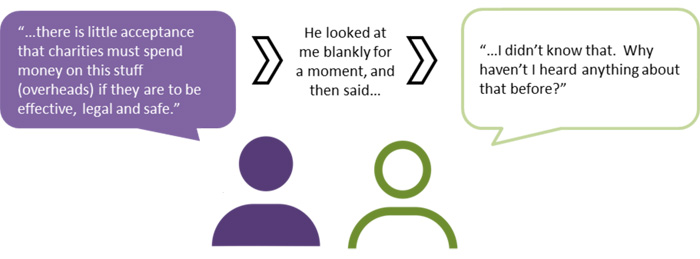
I then treated him to a rant about the difficulty of getting core funding; of donors wanting to know that their money was going only to ‘the cause’; of funders only wanting sparkly new projects; of people thinking that volunteers are free … He found my monologue so deeply moving that during the second hour his eyes glazed and he began to gently sway.
There’s a brilliant TED talk by a guy called Dan Pallotta, available trough this link. He is a USAvian (Kirsty’s preferred term for non-native/indigenous Americans) who set up two hugely successful not-for-profit ventures which raised almost $600 million in less than 10 years. Both went out of business (very traumatically) because of public outrage that his organisations spent 40% of income on ‘overheads’. Pallotta says:
…that the backlash was the result of a fundamental assumption that charities should have low overheads, a standard that businesses are not held to.
Pallotta presents as a slick and prosperous chap, and when he talked about spending 40% of income on overheads, I’m ashamed to say that my immediate reaction was suspicion. “Oh okay, you’re one of those ‘pretend’ charity people. One of those business people jumping on the charity bandwagon to feather your nest”. But as the talk continued, I realised that I was reacting in a ridiculous knee-jerk way. I was well and truly sold when he said something along the lines of
“…building and maintaining a successful sustainable organisation costs money.
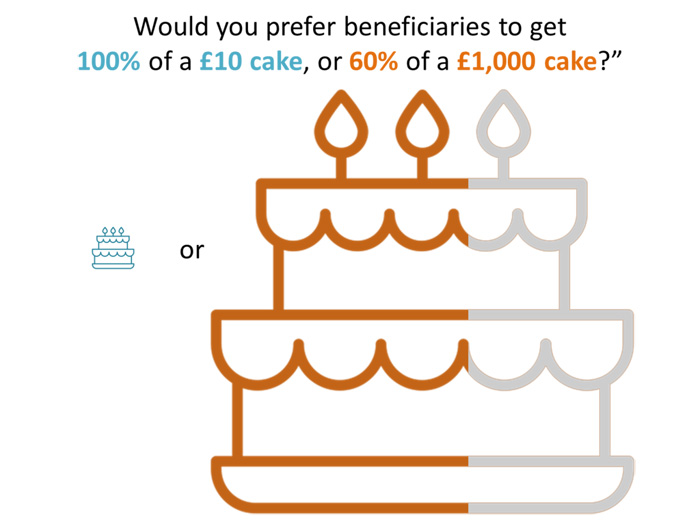
Some major funders are completely on board with this thinking.
The Lloyds Bank Foundation, available via this link, recently said that they will start funding for six-year periods and will aim to offer unrestricted grants wherever possible. Brilliant news, and I hope many more funders follow suit. But before we can help other people to understand the need for investment in our organisations, perhaps we need to change our thinking a bit. We need to stop the virtue signalling about how 99% of our income goes to ‘the cause’ and only 1% goes on overheads because we pay our staff peanuts, don’t have a training budget, and work in a condemned portacabin. We should be virtue signalling about our effectiveness at changing the world, and making it clear that this costs money!
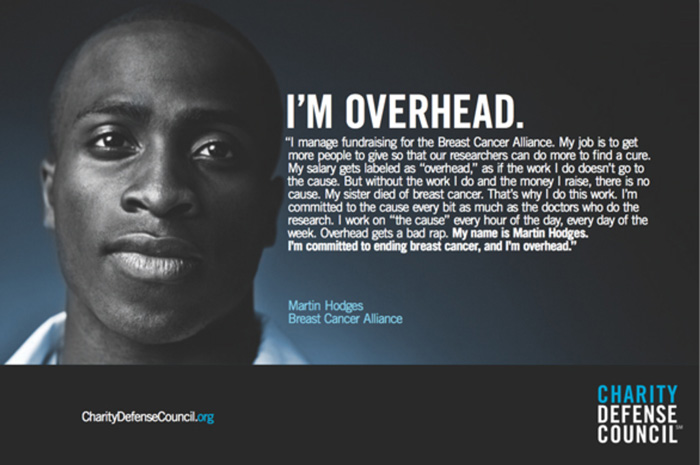
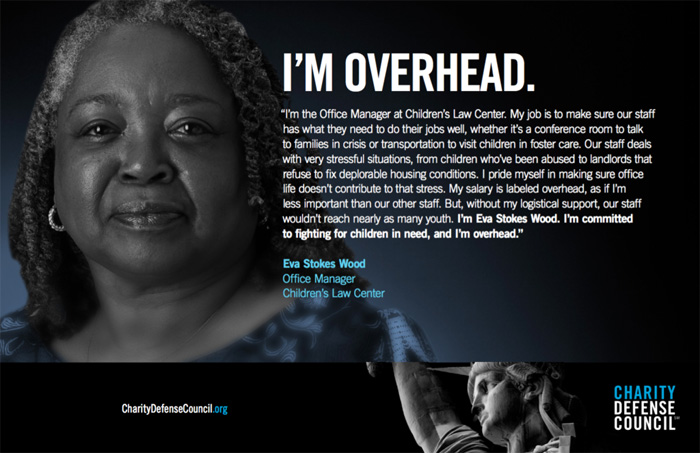
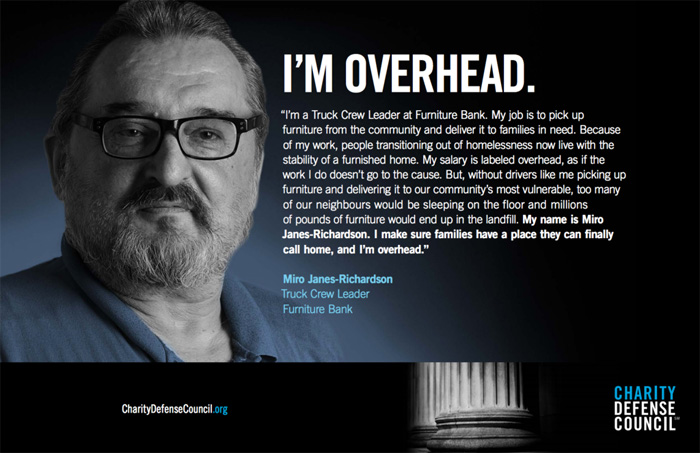
For more stories and information about the Charity Defense Council click this link